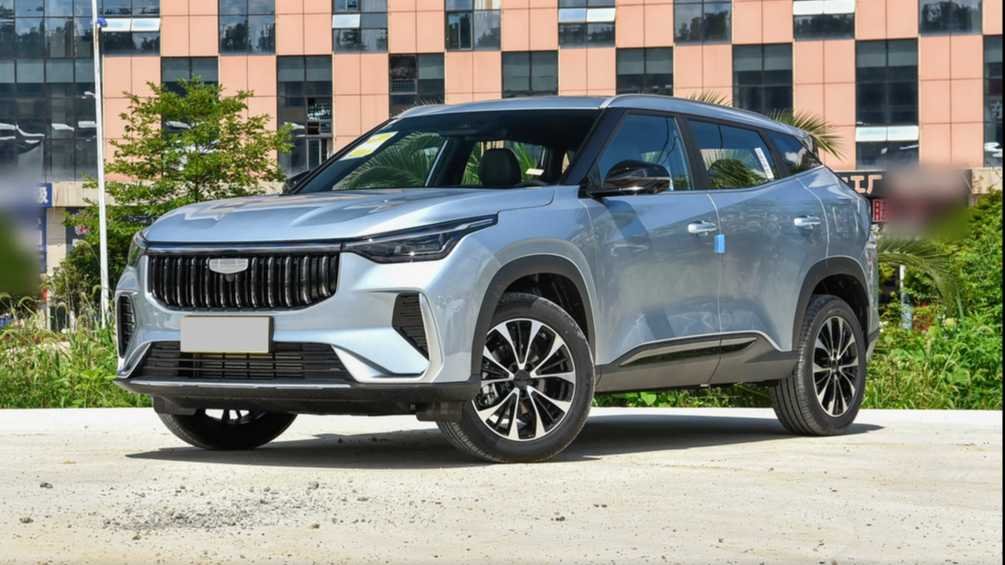
In the automotive market, A-segment family SUVs have always been favored by everyone. After all, who wouldn't want a car with suitable space that is economical and practical? As early as 5 years ago, when buying a family SUV, many friends might still have been fixated on joint venture models from German, Japanese, and other brands. However, with the rise of domestic cars and the maturity of everyone's consumption concepts, more and more friends are not only focusing on the brand, but also placing greater emphasis on the balanced performance of the model. Especially in the 100,000-150,000 yuan family SUV market, everyone wants both an affordable price and no compromise on vehicle quality and safety configurations.
Today let's compare two popular models among A-segment family SUVs and see which is more worth buying, the all-new Boyue or the Toyota Frontlander, and especially when it comes to safety, which one comes out on top.
Let's start with the price that everyone cares about most. The price range of the all-new Boyue is 85,900-106,900 yuan, with a limited-time launch price of 78,900-99,900 yuan. Now looking at the Toyota Frontlander, its official guide price is 125,800-184,800 yuan. In terms of price, the all-new Boyue is clearly more attractive, about nearly 50,000 yuan lower than the Frontlander. For families with limited budgets, this is no small difference.
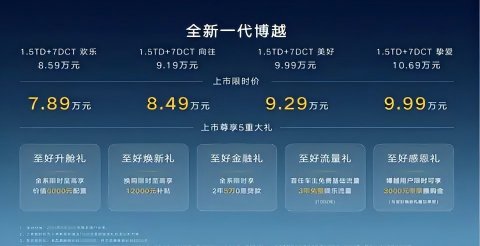
To be fair, we selected two models with relatively similar results for comparison: the limited-time priced 99,000 yuan all-new Boyue 2026 1.5TD Beloved Edition (hereinafter referred to as the new Boyue) and the Frontlander 2024 2.0L CVT Leading Edition quoted by dealers at 101,800 yuan (hereinafter referred to as the Frontlander). Note that here we are talking about the dealer quote, which is roughly the Frontlander's terminal selling price. From this we can see that even after terminal discounts, the Frontlander is still several thousand yuan more expensive than the all-new Boyue. However, price is only a preliminary reference. What really matters is value for money—that is, what kind of configurations and value the vehicle can provide at this price.
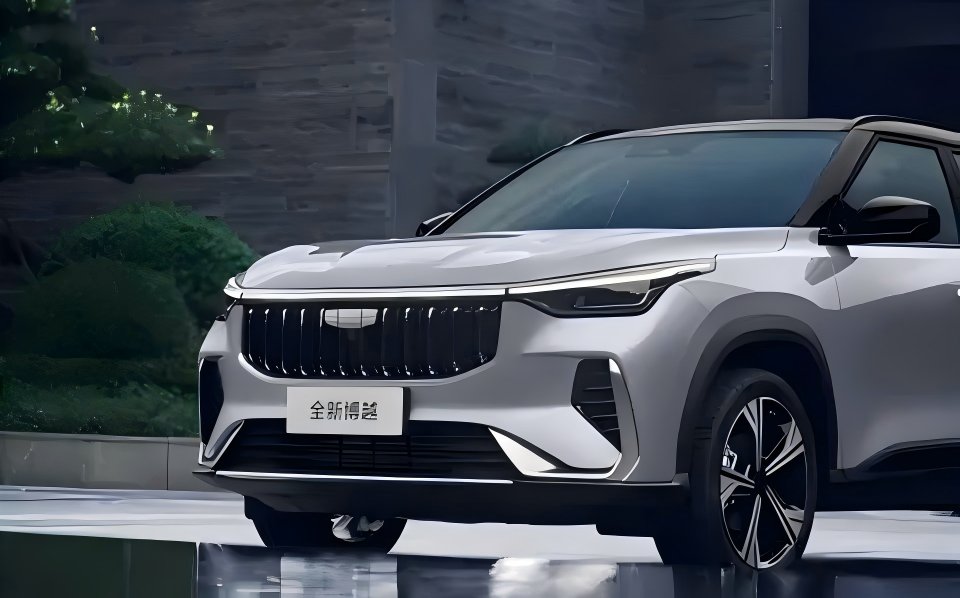
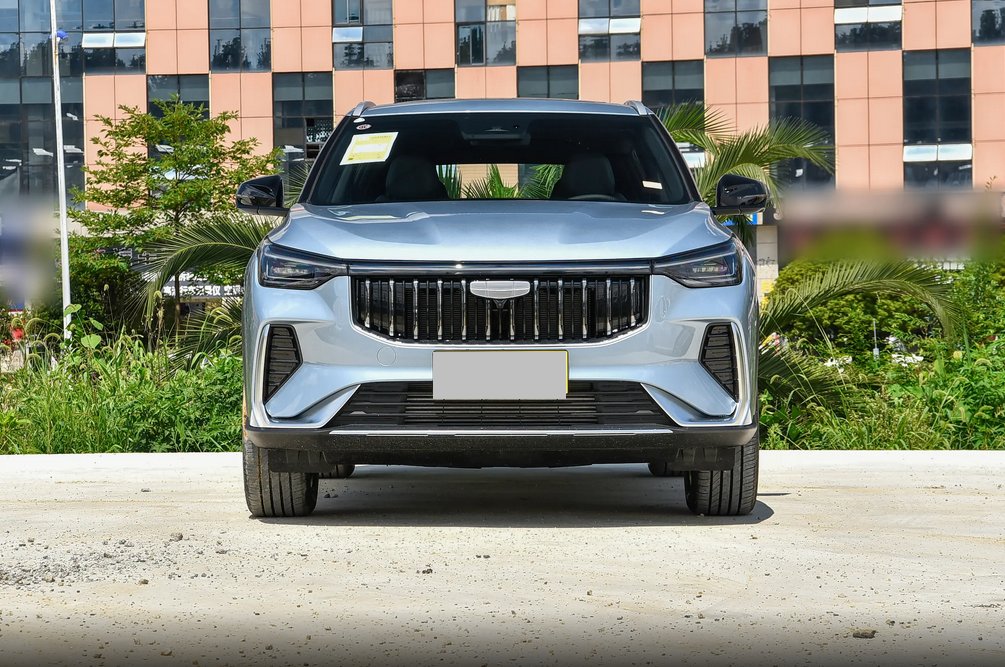
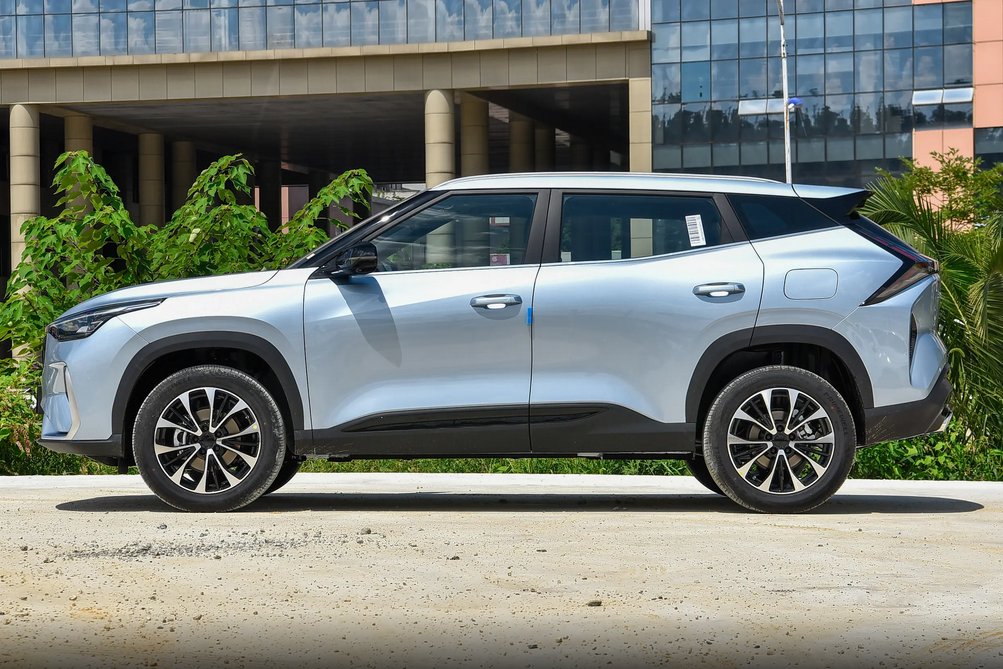
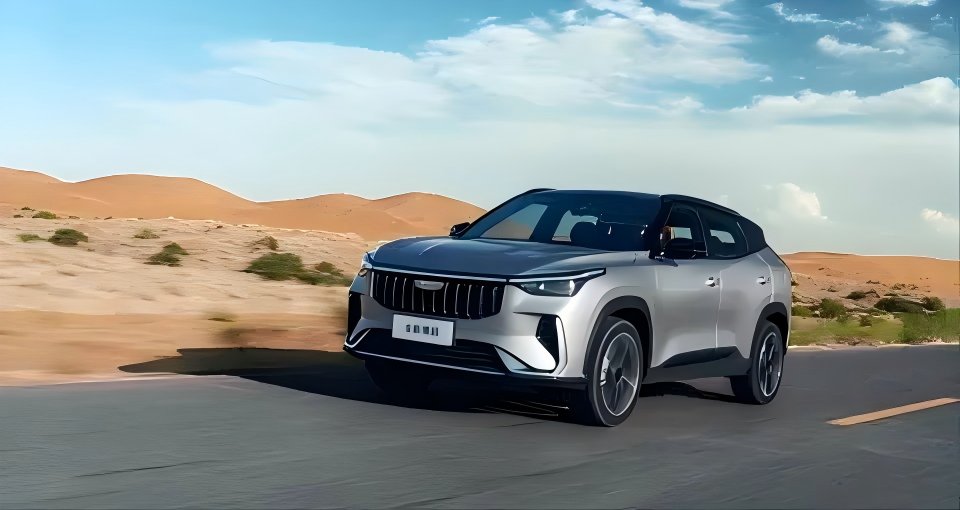
In terms of exterior design, beauty is in the eye of the beholder. The all-new generation Boyue adopts "New Chinese Home Aesthetics" as its design language. The front face uses a "Long Bridge Lying Over Waves" grille and a 2.05-meter continuous light assembly, paired with "Embracing the Moon and Supporting the Beam" trim, creating a grand visual impact with cultural charm.
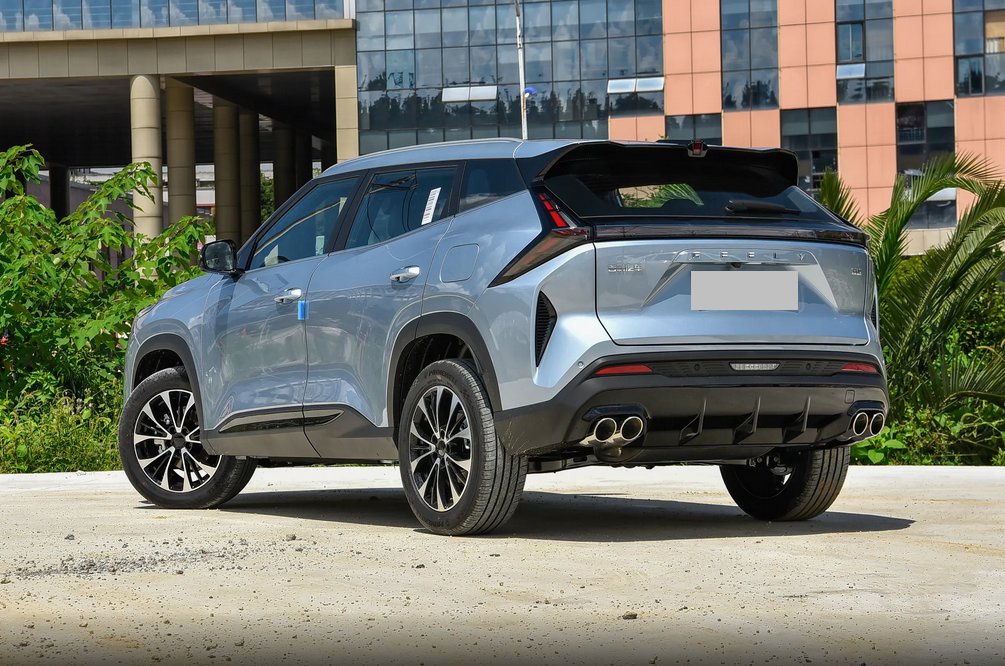
The side features a floating black roof and hidden door handles that outline smooth lines. The wheel arches are widened and paired with 19- or 20-inch wheels, and the drag coefficient is as low as 0.29Cd. The rear's straight spoiler and matrix-style continuous taillights echo the front, while the blackened trim and diffuser enhance the sporty feel. The body offers New Chinese-style colors such as Glazed Blue and Rainy Alley White, and the six-layer painting process delivers good texture and style.
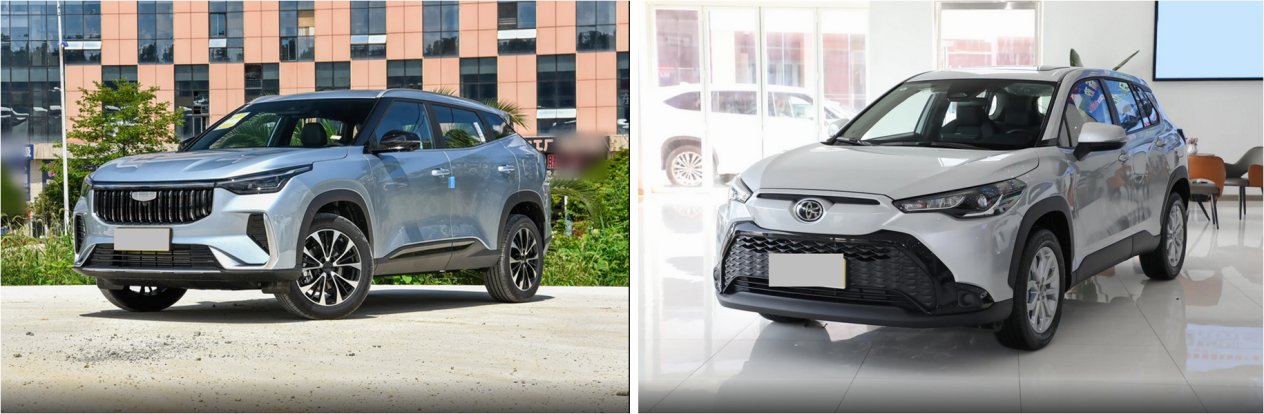
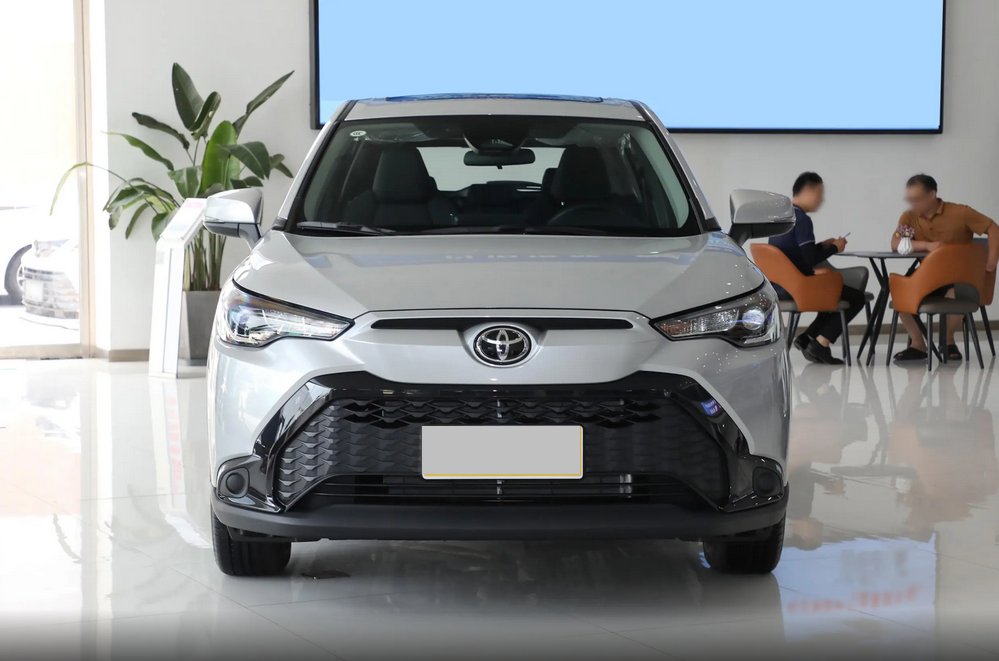
As for the Frontlander, it adopts Toyota's family-style front face. The overall design is fairly conventional, easy on the eyes but lacking a bit of freshness. In addition, the halogen headlights equipped on the vehicle seem insufficiently stylish in today's era when LED headlights prevail, and the lighting effect is also somewhat lacking.
As far as appearance goes, this is entirely a matter of personal preference. The Boyue better matches the aesthetics of young families, while the Frontlander may be more suitable for consumers who prefer classic designs.
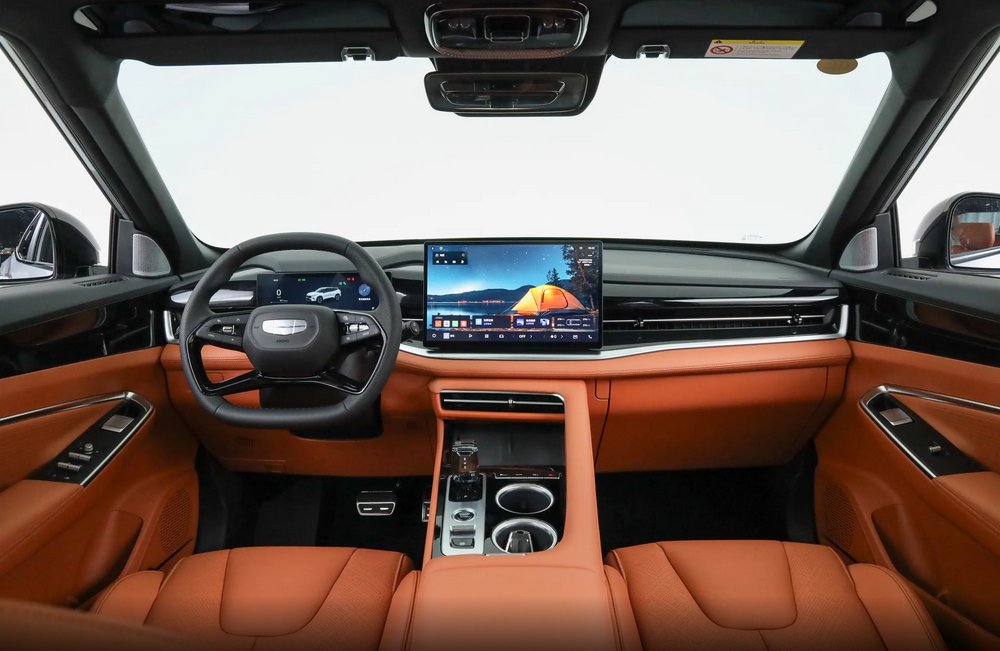
Stepping inside the car, the differences between the two vehicles become even more obvious. The Geely Boyue's interior style leans toward tech luxury, with a reasonably laid-out center console and various function buttons within easy reach. It is worth noting that the all-new Boyue has clearly improved in terms of the intelligent cockpit compared with the 2024 model. It comes standard across the range with a 14.6-inch large screen and the Flyme Auto 1.8 infotainment system, equipped with the Qualcomm Snapdragon 8155 chip, making the system respond faster and operate smoothly. It also supports small-window multitasking, AI voice interaction, gesture control, remote mobile phone connectivity, and other functions. Whether you want to binge-watch a show in the car or handle a bit of office work, it can all be done easily.
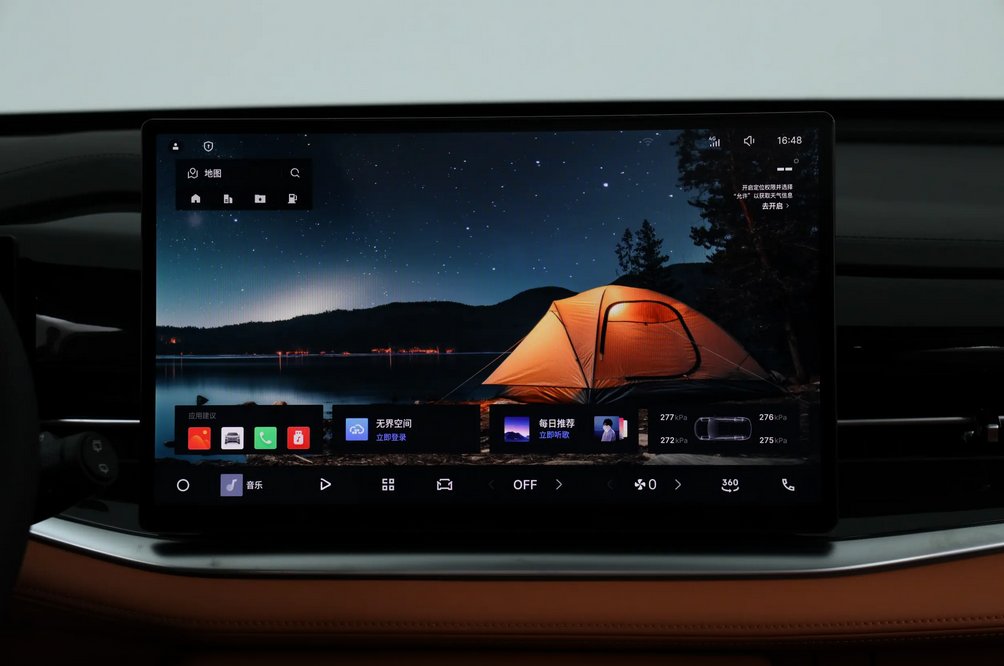
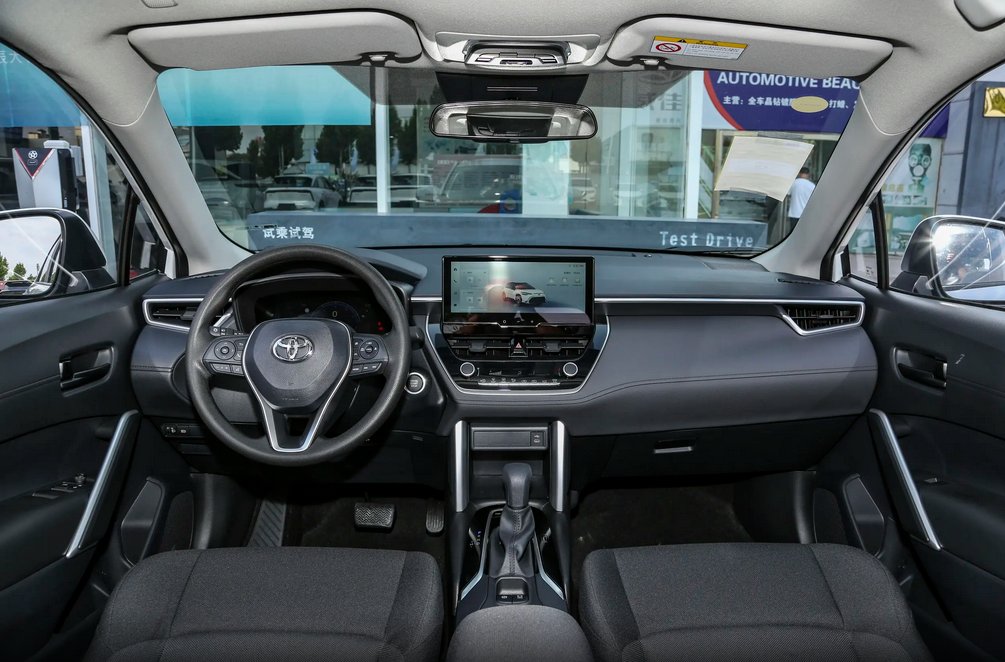
The Frontlander's interior is a typical Toyota style, placing more emphasis on practicality, but in terms of creating a sense of technology, it is somewhat inferior compared with the all-new Boyue. The 10.25-inch central control screen is indeed much less impressive than the all-new Boyue's 14.6-inch large screen. In addition, the infotainment system's functions are not as rich, and the operating experience is not as good as the Boyue's.
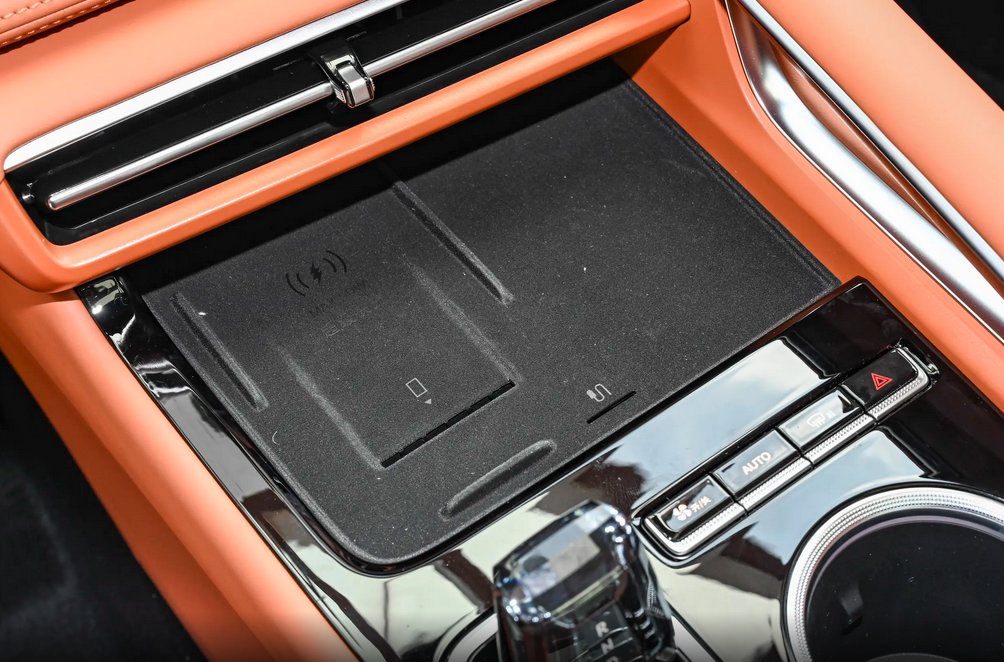
In addition, the all-new Boyue is also equipped with a digital Bluetooth key. The owner can share 5 virtual keys with family members through the app, which is convenient and flexible. The 50W wireless air-cooled super fast charging is also a very practical configuration, allowing the phone to be fully charged on the commute.
The Frontlander is relatively simple in these intelligent configurations. There is no problem meeting basic needs, but for young families pursuing a sense of technology, it may feel insufficient.
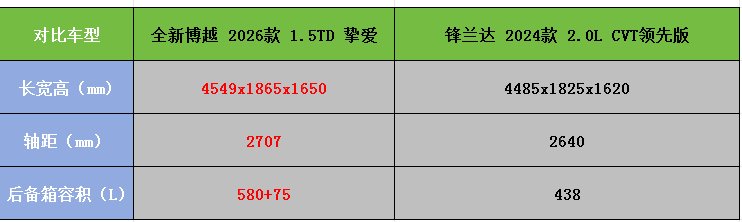
In terms of space, the all-new Boyue's body dimensions are 4549×1865×1650mm, with a wheelbase of 2707mm. In comparison, the Frontlander's body dimensions are 4485×1825×1620mm, with a wheelbase of 2640mm. We can see that in body dimensions, the all-new Boyue has advantages in length, width, and height, and its wheelbase is 67mm longer than the Frontlander's. Simply put, the all-new Boyue can provide better passenger space.
The all-new Boyue has a room utilization rate of 85.4%, and the interior passenger space has also been optimized. Its 1034mm front-row legroom, 46mm front-row headroom, 147mm rear-row knee room, and 37mm rear-row headroom are all better than the Frontlander's. Maybe you are not so sensitive to numbers. Simply put, if three friends 1.8 meters tall sit in the rear row, the Frontlander may feel "shoulder to shoulder," but the all-new Boyue will not. The Frontlander's rear legroom has only a little more than one fist of margin, while the all-new Boyue's rear legroom can reach more than two fists of margin. In addition, the rear seat cushion of the all-new Boyue has also been lengthened (525mm), which can provide better leg support and prevent the fatigue of dangling legs during long rides.
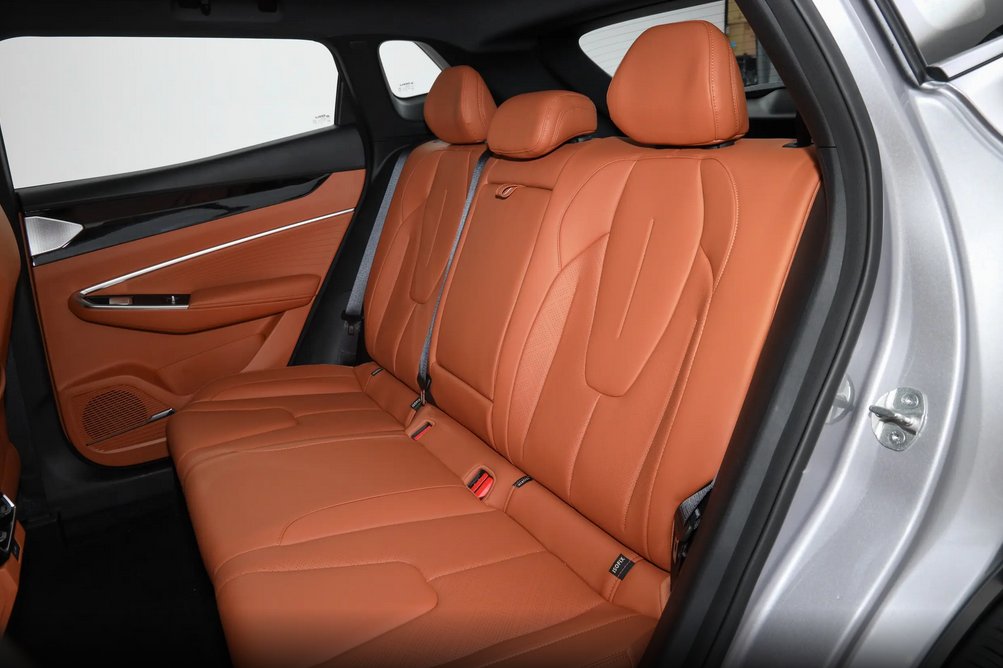
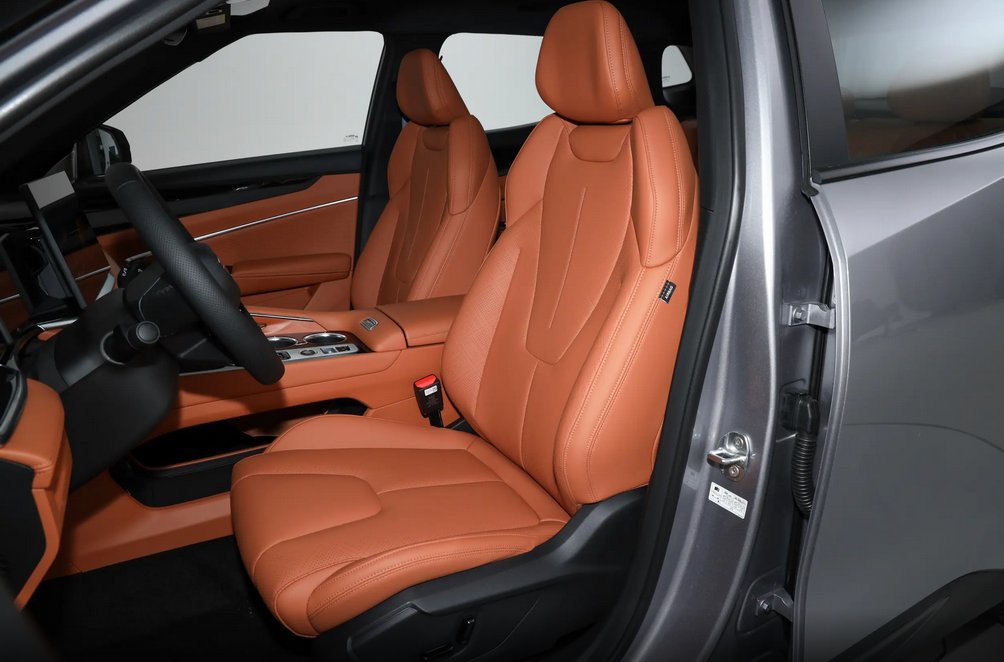
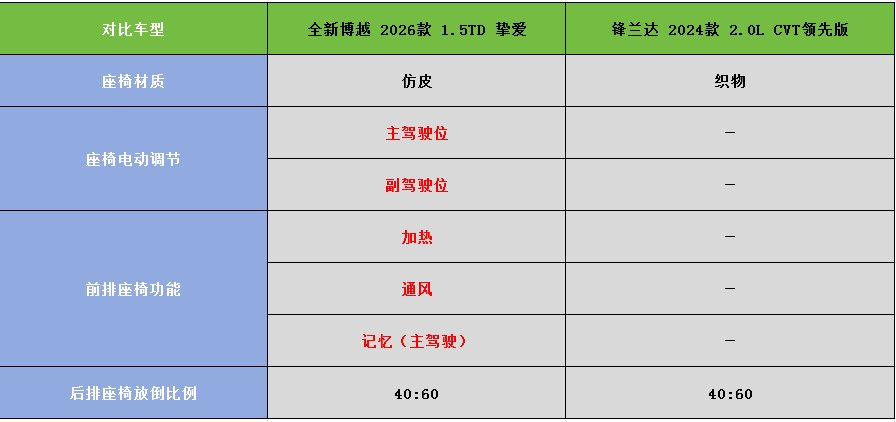
Speaking of ride comfort, we should also talk about the vehicle's seat comfort configurations. The all-new Boyue uses leather seats, while the Frontlander has fabric seats. In addition, the front seats of the all-new Boyue both support power adjustment and offer heating, ventilation, and memory (for the driver), while all seats in the Frontlander can only be adjusted manually and are not equipped with heating or ventilation functions. Relatively speaking, the all-new Boyue is superior in terms of convenience and comfort. In terms of storage space, the all-new Boyue has as many as 37 storage spaces inside the car. Small items such as phones, cups, and umbrellas can all find suitable places to be placed: the map pockets on the seatbacks can hold travel guides, the hooks on the headliner and B-pillars can hang photography equipment bags, and various hidden spaces such as upper and lower storage boxes on the door trim and dual phone storage boxes can meet various storage needs.
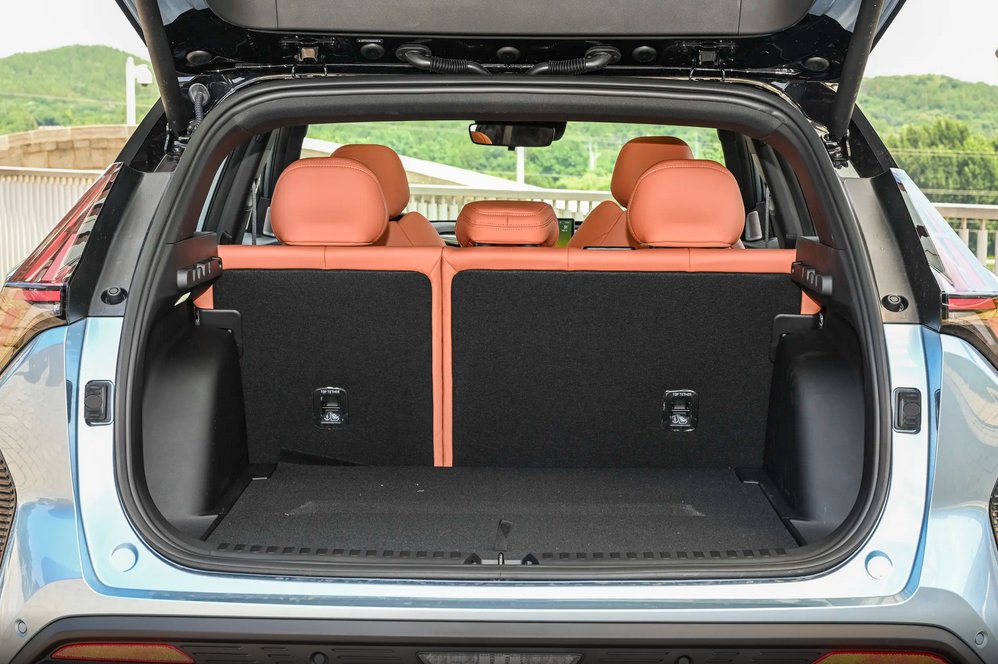
The all-new Boyue's trunk volume is 580L, while the Frontlander's trunk volume is 438L. That is to say, when going on a self-driving trip, the all-new Boyue can hold two more large suitcases. In addition, the all-new Boyue also has a 75L lower storage compartment, usually used to store some relatively valuable items, and the dual-layer partitioned storage can also make things tidier.
In terms of power, the all-new Boyue is equipped with a 1.5T + 7DCT powertrain combination, with a maximum power of up to 133kW and peak torque of 290N·m. Overtaking and changing lanes in the city are crisp and clean. Moreover, its WLTC fuel consumption is 6.44L, achieving a good balance between power and fuel economy.
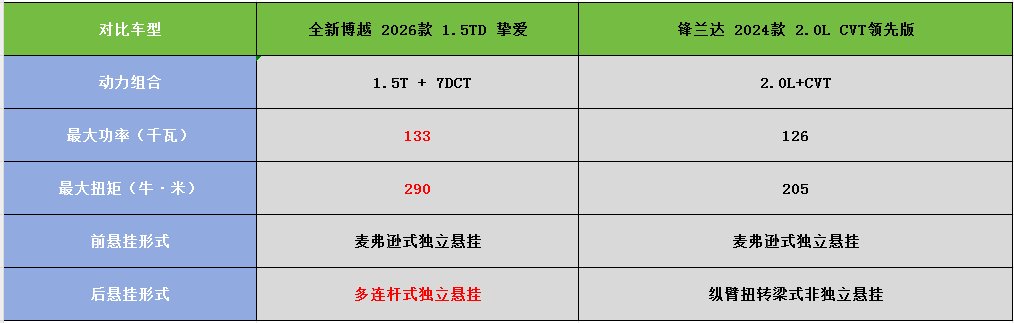
The Frontlander uses a 2.0L naturally aspirated engine, matched with a CVT continuously variable transmission (simulating 10 gears), with maximum power and maximum torque of 126kW and 205N·m respectively. By comparison, the all-new Boyue's power output is stronger. Whether it is rapid acceleration in the city or high-speed overtaking, the Boyue can give you a more confident driving experience. Moreover, the all-new Boyue adopts a rear multi-link independent suspension. Compared with the Frontlander's rear torsion beam non-independent suspension, the Boyue can better filter vibrations when driving over bumpy roads or speed bumps, making passengers feel more comfortable and improving driving stability.
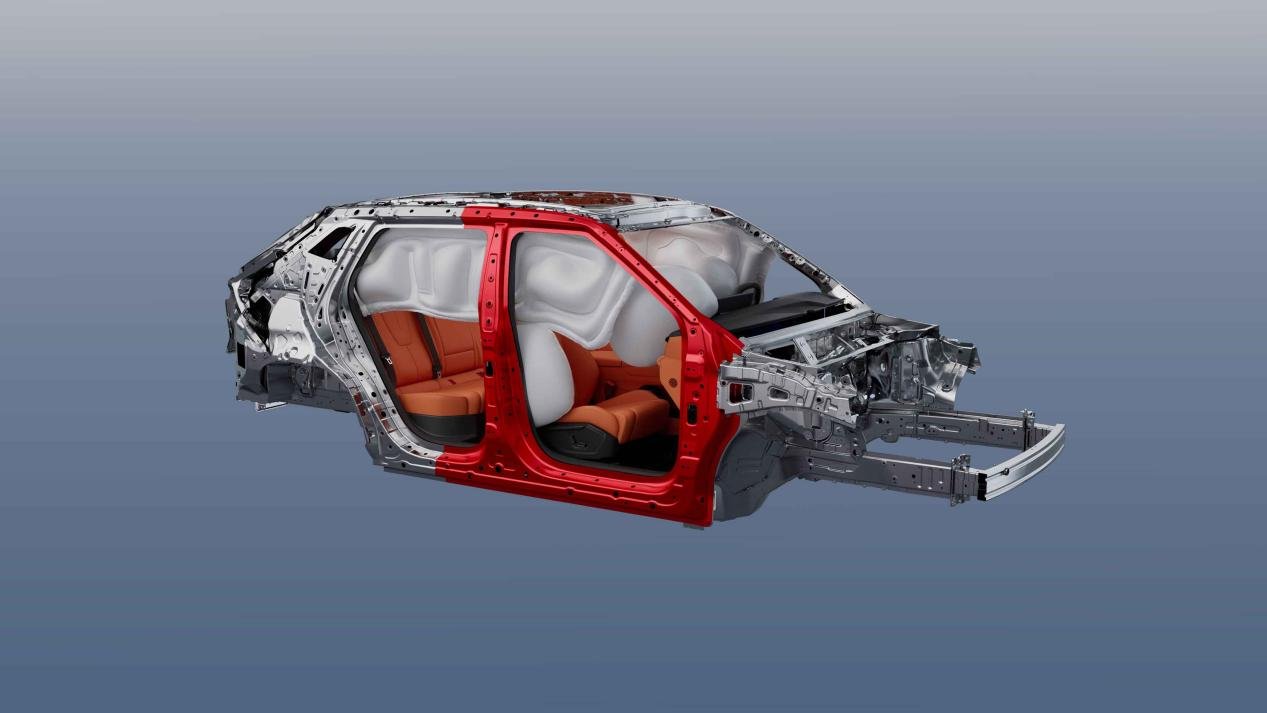
Next, let's focus on the safety aspect that everyone cares about most. Let's first look at passive safety, which is the last line of defense for vehicle safety. The Frontlander is equipped with an aluminum alloy front anti-collision beam and a high-strength rear anti-collision beam, which to a certain extent can reduce the impact force during a collision. On the all-new Boyue's side, it not only has a high-strength front anti-collision beam and a high-strength rear anti-collision beam, but is also equipped with a clover force-dissipation system, which can better disperse impact force in a collision and reduce harm to occupants. It also uses a 1500MPa integrated thermoformed boron steel door ring, greatly enhancing the body's rigidity, just like putting a sturdy suit of armor on the body. From the perspective of passive safety hardware equipment, the Boyue is more thorough in its considerations.
In terms of active safety, the Frontlander has functions such as lane keeping assist, emergency lane keeping assist, ICC intelligent cruise assist, 540° transparent chassis, pedestrian recognition and protection system, and traffic sign recognition. These can play a certain auxiliary role in daily driving and help drivers reduce some accident risks.
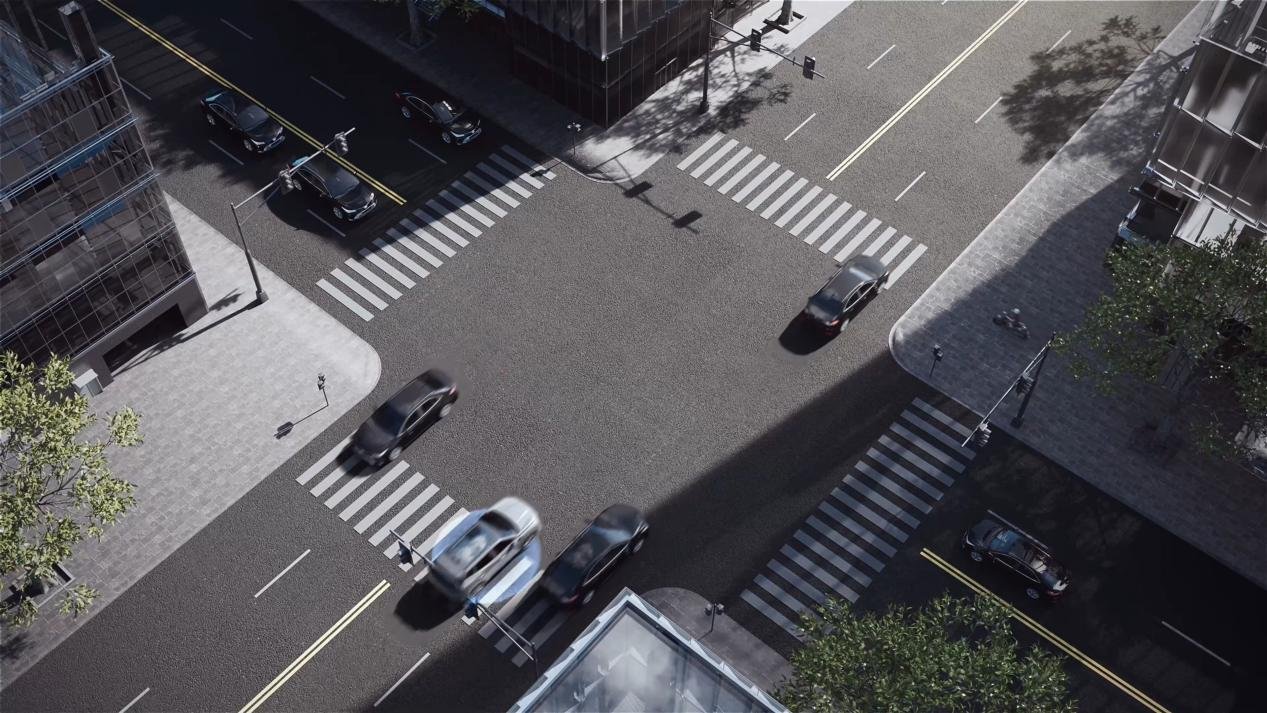
In addition to the above functions, the all-new Boyue also adds LCA lane change assist. When you are about to change lanes, if a vehicle in the adjacent lane is approaching, it will remind you in time to avoid a collision. The DOW door opening warning system is also very practical, as it can prevent passengers from hitting approaching vehicles or pedestrians from behind when opening the door. The blind spot monitoring function can keep an eye on the vehicle's blind spots at all times. Rear collision warning and rear cross traffic alert further improve safety when reversing or when vehicles are approaching from behind. It can be said that in terms of active safety configurations, the Boyue is richer than the Frontlander and can provide drivers with more comprehensive safety protection.
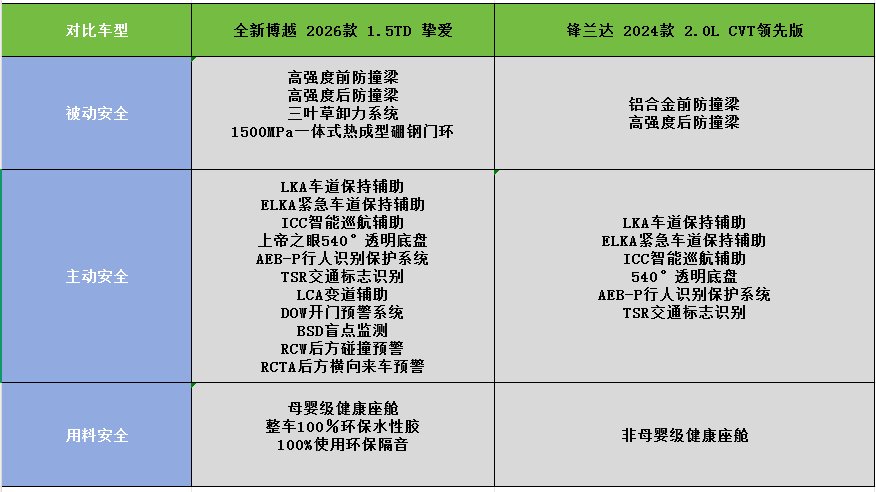 Finally, let's talk about material safety. The safety of the interior environment also cannot be ignored. After all, we spend most of our time inside the car. The Frontlander uses a non-maternal-and-infant-grade healthy cabin. The all-new Boyue, by contrast, creates a maternal-and-infant-grade healthy cabin. The entire vehicle uses 100% environmentally friendly water-based adhesives, and the sound insulation materials also 100% use environmentally friendly materials, which can effectively reduce interior odors and the generation of harmful gases, providing passengers in the car, especially the elderly, children, and pregnant women, with a healthier and more comfortable riding environment.
 In conclusion:
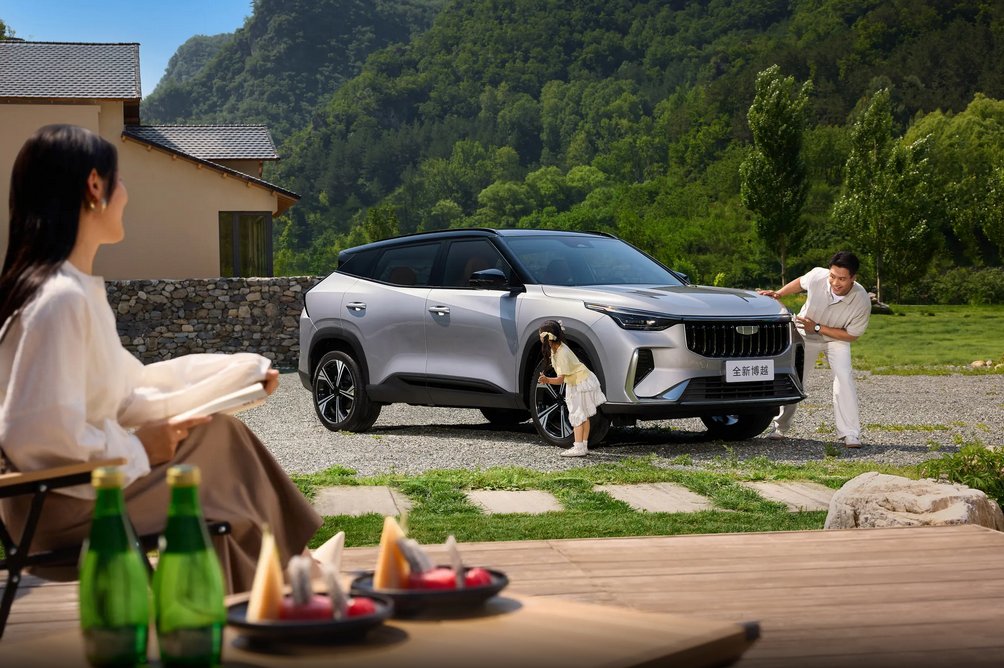
Overall, the all-new Boyue and the Toyota Frontlander are both good A-segment family SUVs. But through comparisons in various aspects, especially in the key dimensions of intelligent configurations, space performance, and safety performance, the all-new Boyue has shown more advantages. In addition, from the perspective of price, the all-new Boyue offers better value for money. Spending less money can get you more spacious passenger space, richer safety configurations, and a better intelligent experience. If you have a budget of around 100,000 yuan and want to buy a family SUV with relatively balanced performance in all aspects, then the all-new Boyue may be a better choice.


