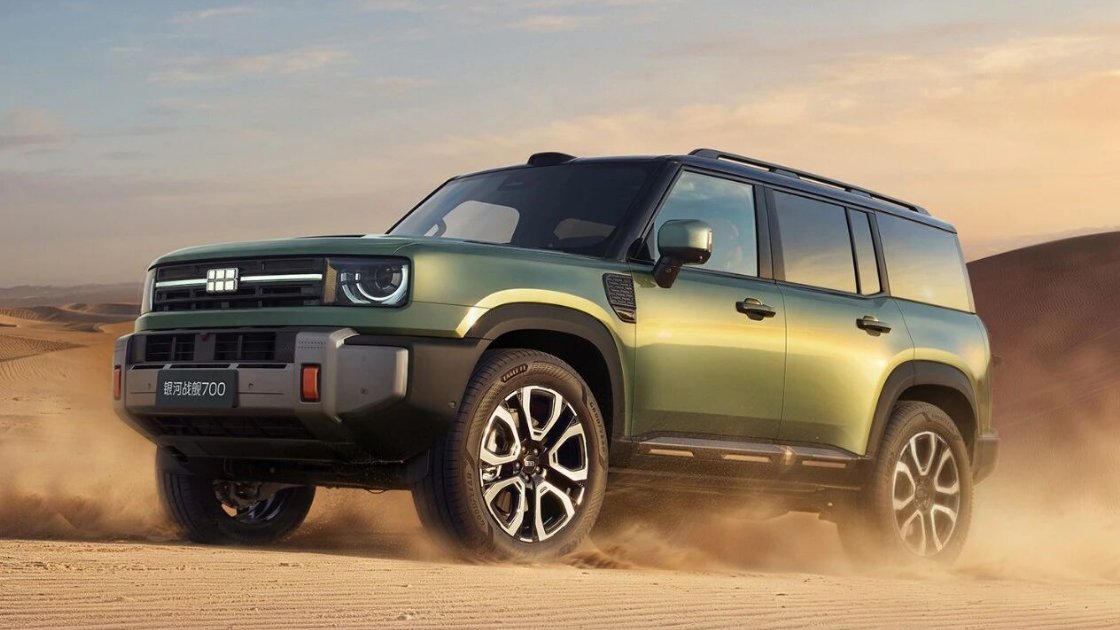
On October 10, the Galaxy Battleship 700 held its global launch in Hangzhou, with a total of 6 models introduced. The new vehicle is built on the GTA native new energy off-road architecture, adopting a combined structure of a unibody and an integrated ladder frame.
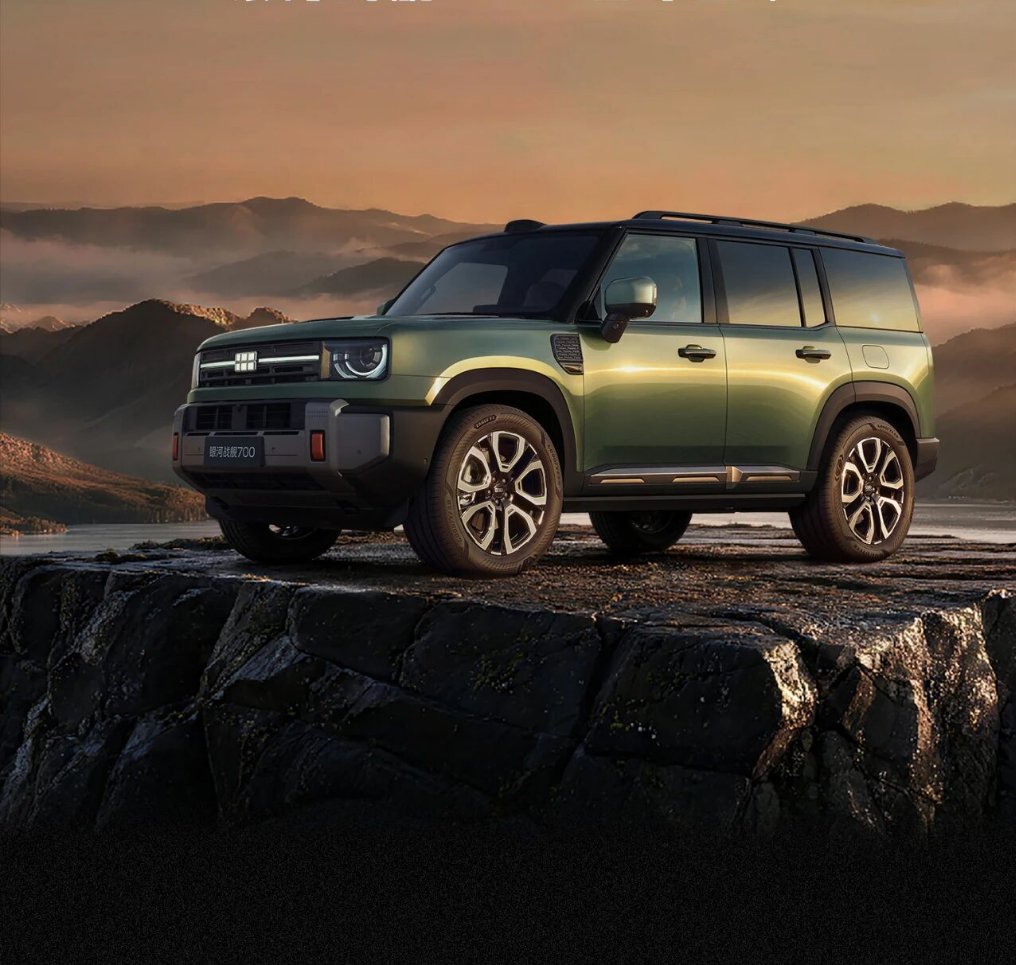
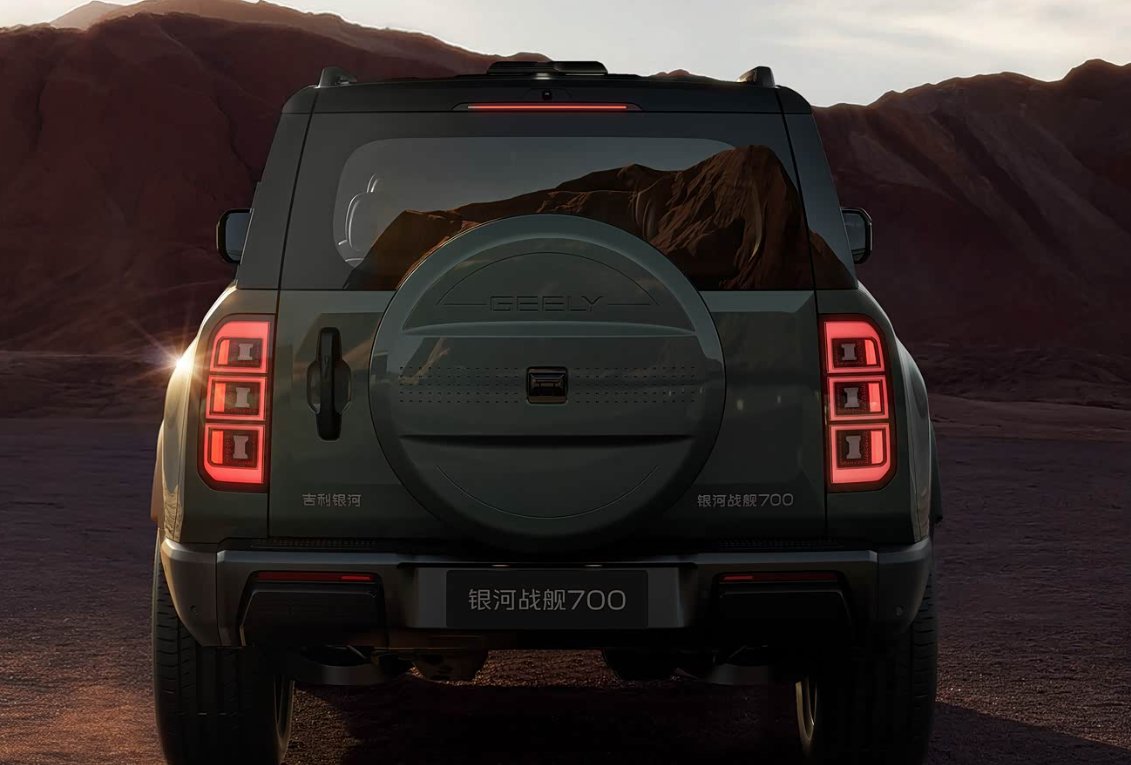
The new vehicle features a boxy design, equipped with traditional pull-type door handles and roof rails. The rear adopts a side-opening tailgate plus externally mounted spare tire structure. The vehicle's length, width, and height are 5085×1999×1912 mm respectively, with a wheelbase of 2900 mm, a trunk volume of 1050 liters, and a large five-seat layout inside, offering a total of six body colors.

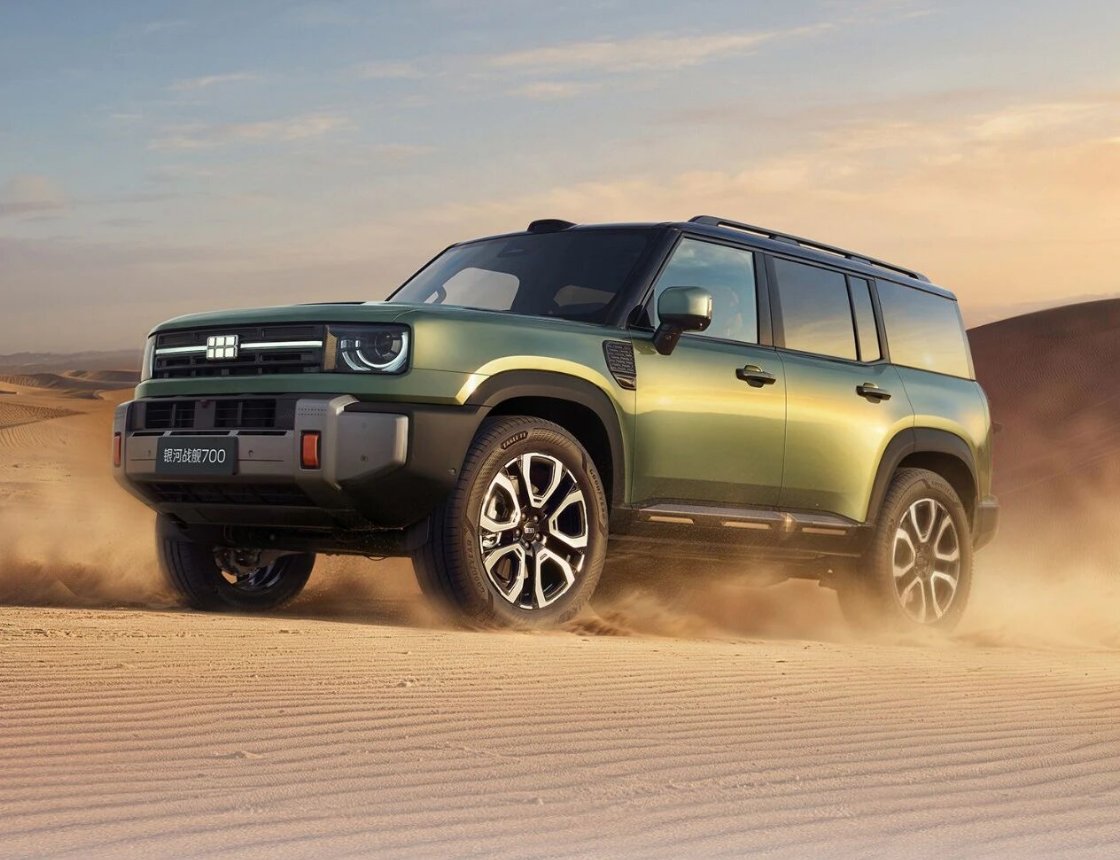
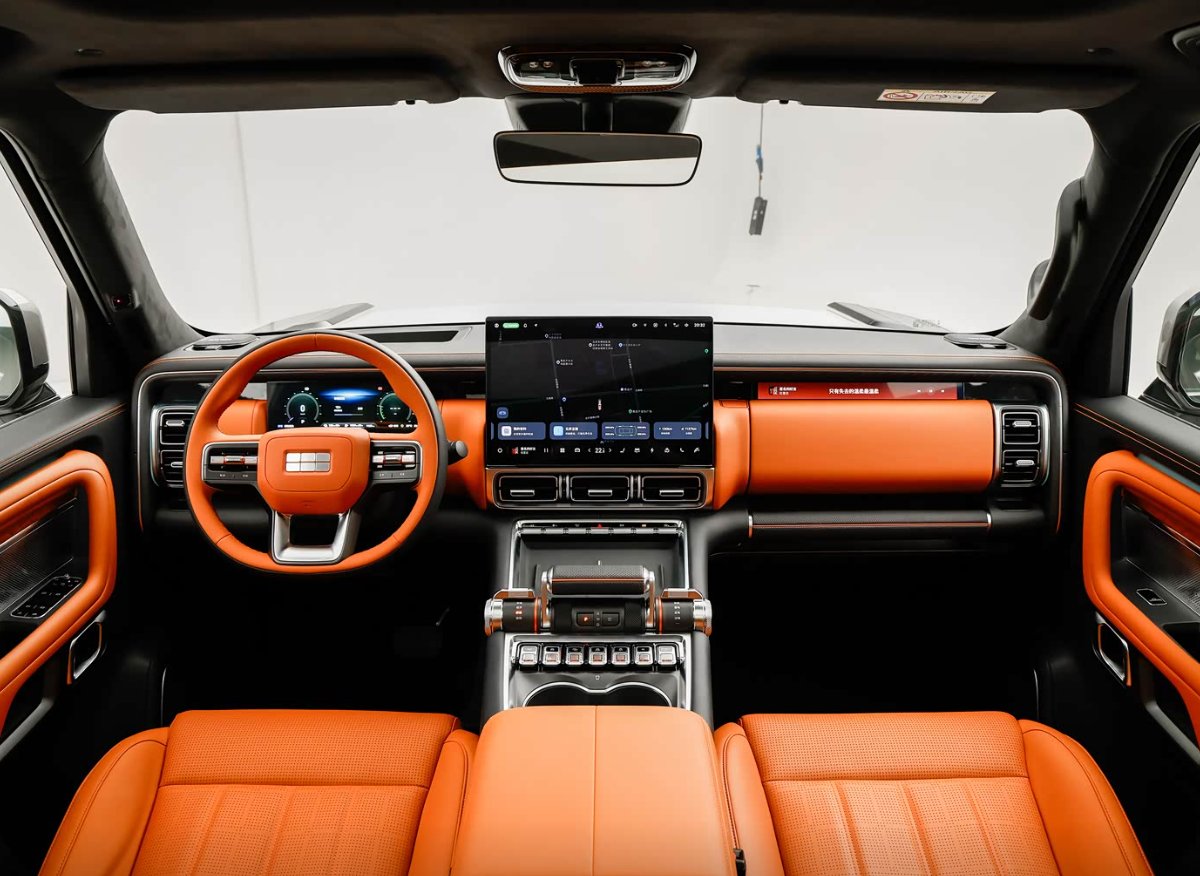
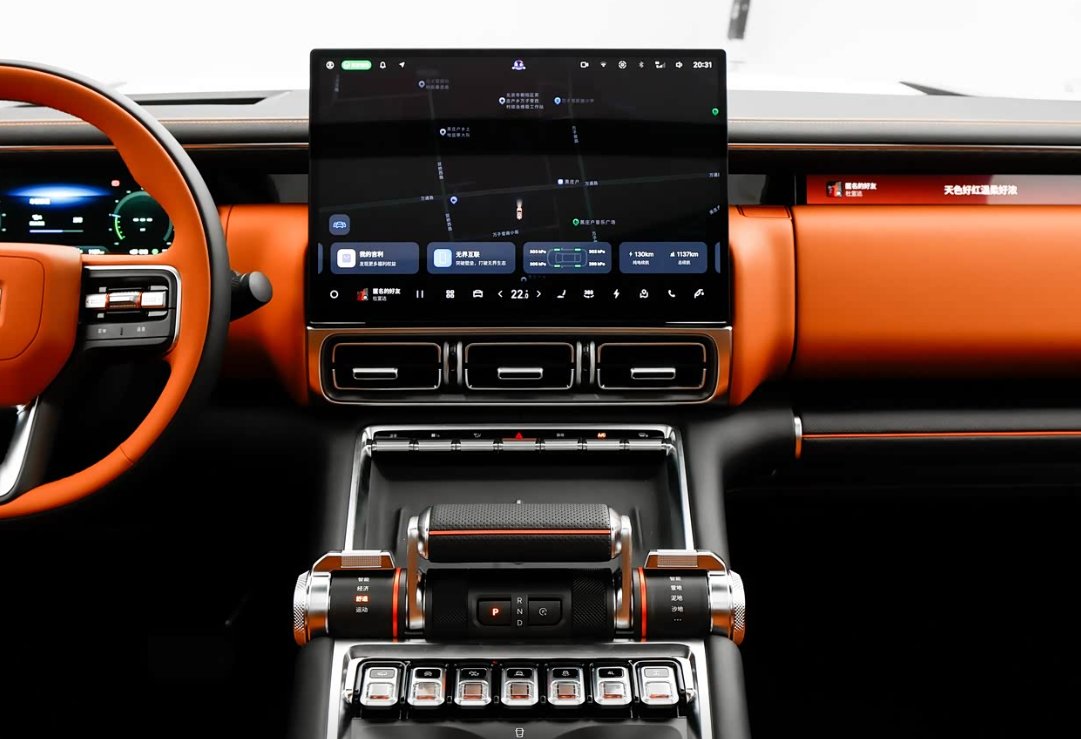
In terms of interior, the center console retains an aircraft throttle-style gear shifter and physical off-road buttons, allowing operations to be completed on bumpy roads without relying on the touchscreen. The interactive interface consists of a 10.2-inch instrument screen, a 15.4-inch 2K center control screen, and a 15.2-inch HUD, with a 12.66-inch passenger screen available from the Yufeng+ trim and above; the infotainment system runs Flyme Auto 2, with a built-in Super Eva intelligent entity, supporting CarPlay, HiCar, and Carlink connectivity. In terms of comfort, the 23-speaker Flyme Sound audio system, 18.5-liter front and rear dual-door-opening heating/cooling refrigerator, ventilated and heated seats for all occupants, and dual-opening panoramic sunroof are standard across the entire lineup, while front seat massage and passenger electric leg rest are available on the Exploration+ trim and above.
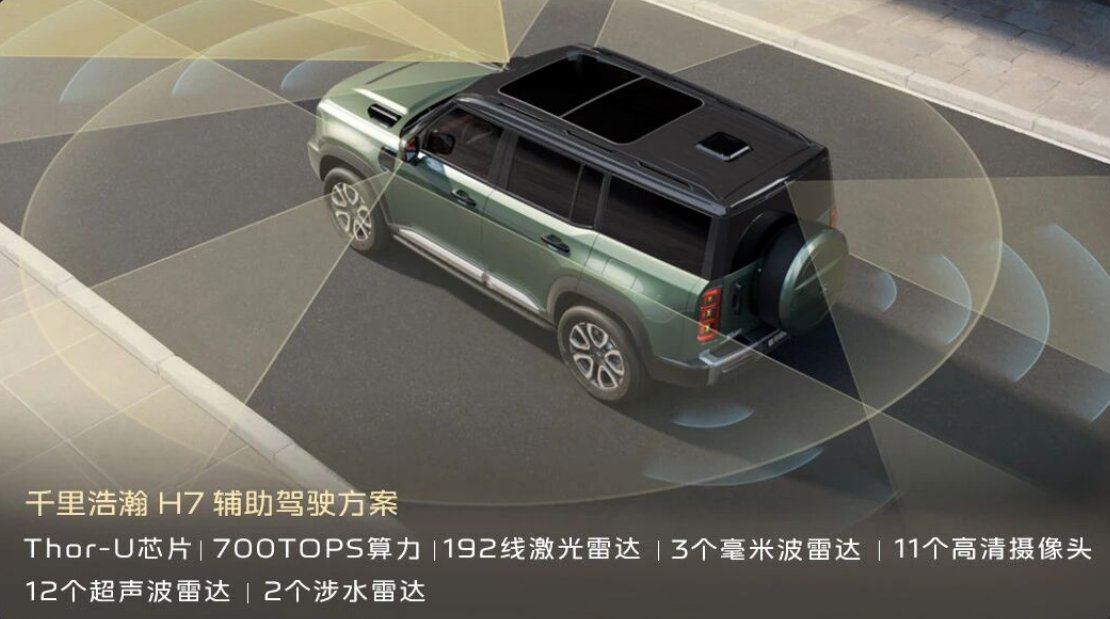
In terms of intelligent driving, the Exploration trim offers basic L2 level, without LiDAR and advanced navigation assistance; the Exploration+, Yufeng, and Yufeng+ trims are equipped with the Qianli Haohan H5 solution, featuring a 192-line LiDAR, enabling highway and urban NOA navigation assistance; the Peak and Land Ark trims are upgraded to the Qianli Haohan H7 solution, with added door-to-door navigation assistance. For off-road scenarios, a 540-degree off-road view is also provided, displaying real-time altitude, gradient, and torque distribution.

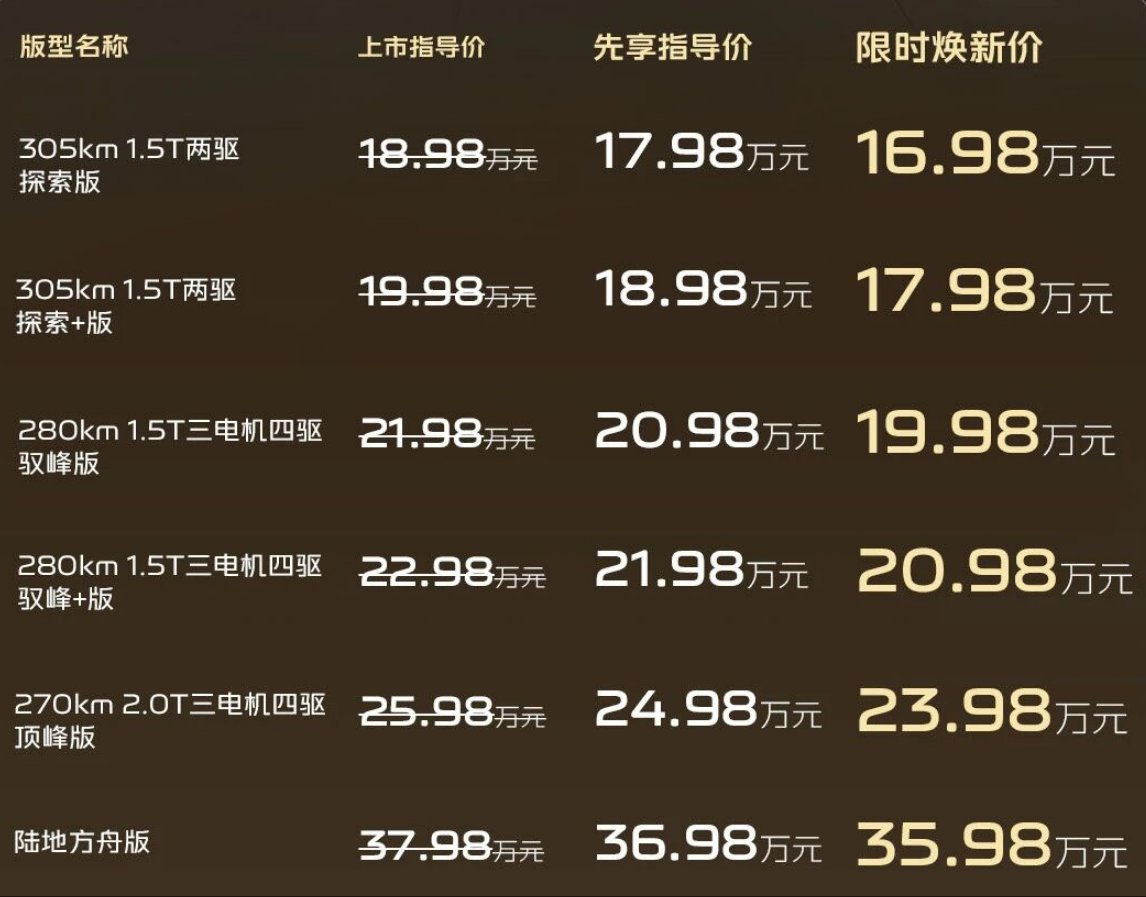
In terms of powertrain, the entire lineup is equipped with the Thor EM-T off-road electric hybrid system and a 3-speed DHT transmission, with an 80-liter fuel tank, of which the 1.5T engine has a maximum power of 120 kW and the 2.0T engine produces 160 kW. The 1.5T two-wheel-drive version has a combined system power of 350 kW, 0-100 km/h acceleration in 6.4 seconds, CLTC pure electric range of 305 km, and combined range of 1770 km; the 1.5T three-motor four-wheel-drive version has a combined power of 690 kW, 0-100 km/h acceleration in 4.2 seconds, pure electric range of 280 km, and combined range of 1520 km; the 2.0T three-motor four-wheel-drive version has a combined power of 830 kW, 0-100 km/h acceleration in 3.95 seconds, pure electric range of 270 km, and combined range of 1470 km. The entire lineup comes standard with a 47.14 kWh CATL lithium iron phosphate battery, supporting 6C fast charging, with a charge from 10% to 80% taking approximately 10 minutes, and supporting 6 kW external discharge.
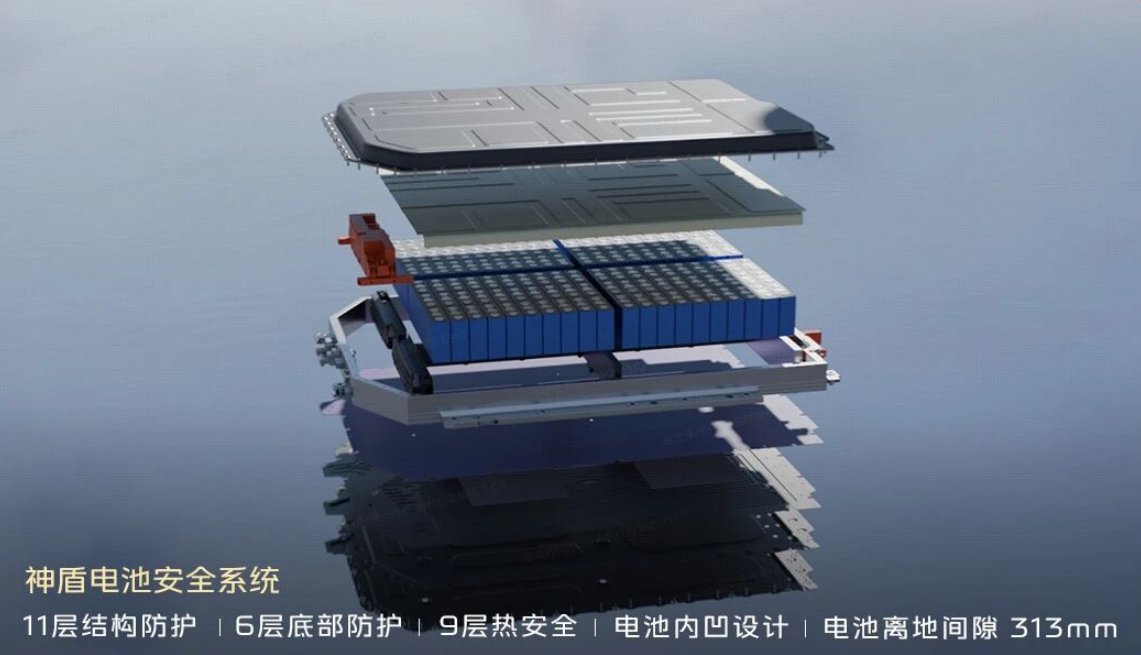
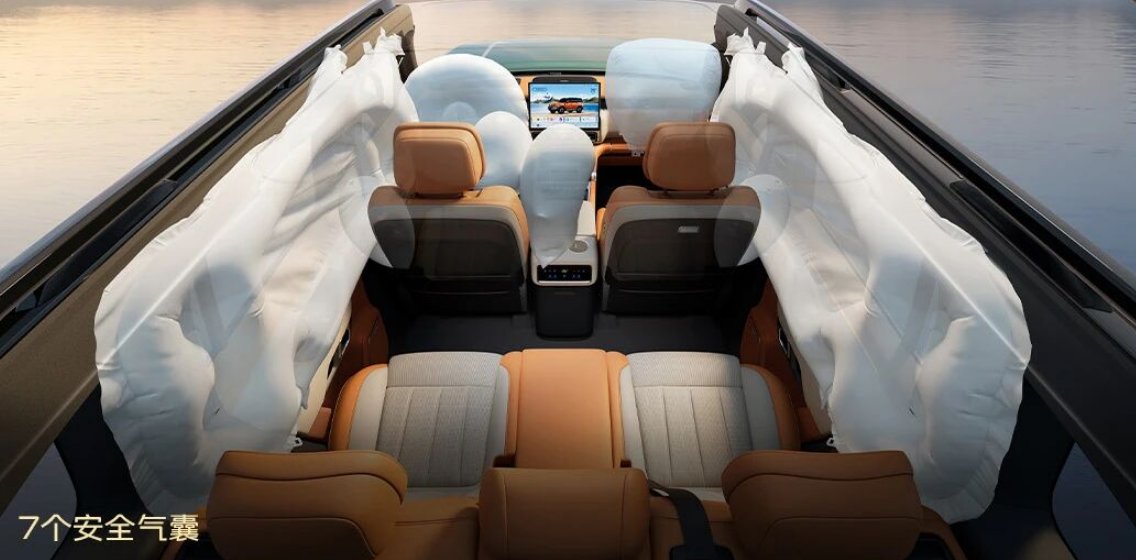
In terms of chassis and off-road hardware, the three-motor four-wheel-drive version adopts two intelligent soft locks plus one mechanical hard lock, balancing both urban and off-road passage needs; the highest-specification tier is the 2.0T Peak and Land Ark versions, equipped with dual-chamber closed air suspension, rear axle mechanical differential lock, and crawl mode, providing satellite communication and wading sensing, with a wading depth of 800 mm; the Land Ark version additionally adds active hydraulic suspension, emergency floating escape, and diffused oxygen supply on top of that.
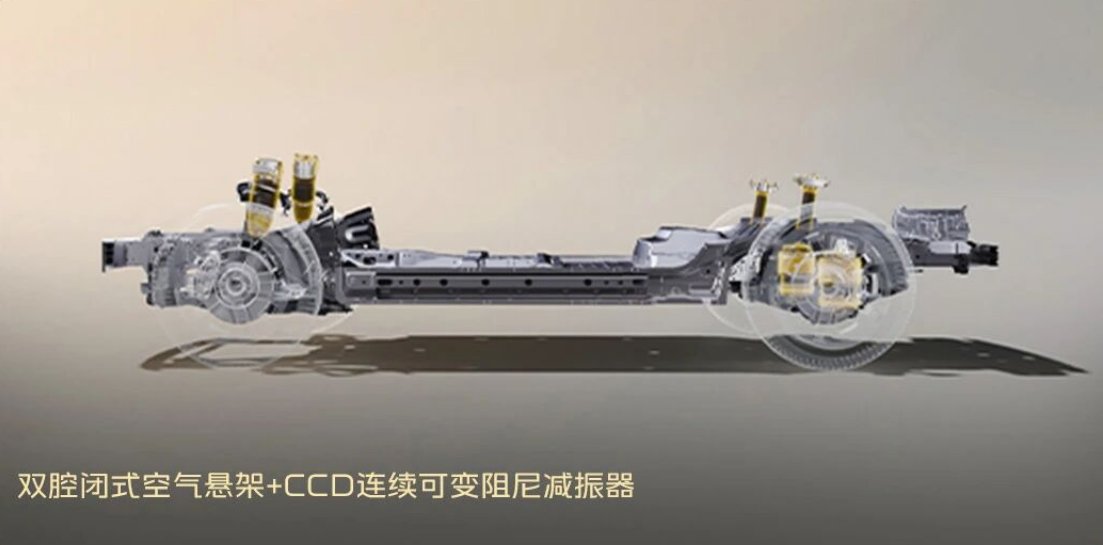

Xiao Tang's Viewpoint: What makes this vehicle worth observing technically is that it has re-engineered the "ladder frame" — the integrated ladder frame embeds the chassis into the body structure, freeing up underbody space while retaining rigidity, so hardcore SUVs no longer have to choose between "off-road capability" and "ride comfort." In terms of power, electric drive compensates for the torque response and urban energy consumption shortcomings of traditional hardcore vehicles, and the six configurations are clearly stratified: two-wheel drive handles commuting, the 1.5T three-motor four-wheel drive is for combined urban and off-road use, and the 2.0T Peak and Land Ark versions establish the capability ceiling. The competition among hardcore SUVs is shifting from single off-road parameters to whether a family can use them smoothly in daily life.


